When it comes to cosmetic surgery, there is no such thing as a "one-size-fits-all" approach—especially with the nose. Because the nose sits at the exact centre of the face, even a millimetre of change can dramatically alter your entire appearance.
While the surgical techniques used in rhinoplasty (a nose job) are fundamentally the same for everyone, the aesthetic goals and anatomical starting points differ significantly between men and women. If you are considering rhinoplasty, understanding these subtle but crucial differences is the first step toward achieving a natural, harmonious result. Let’s explore what sets male and female rhinoplasty apart.
The Approach to Female Rhinoplasty
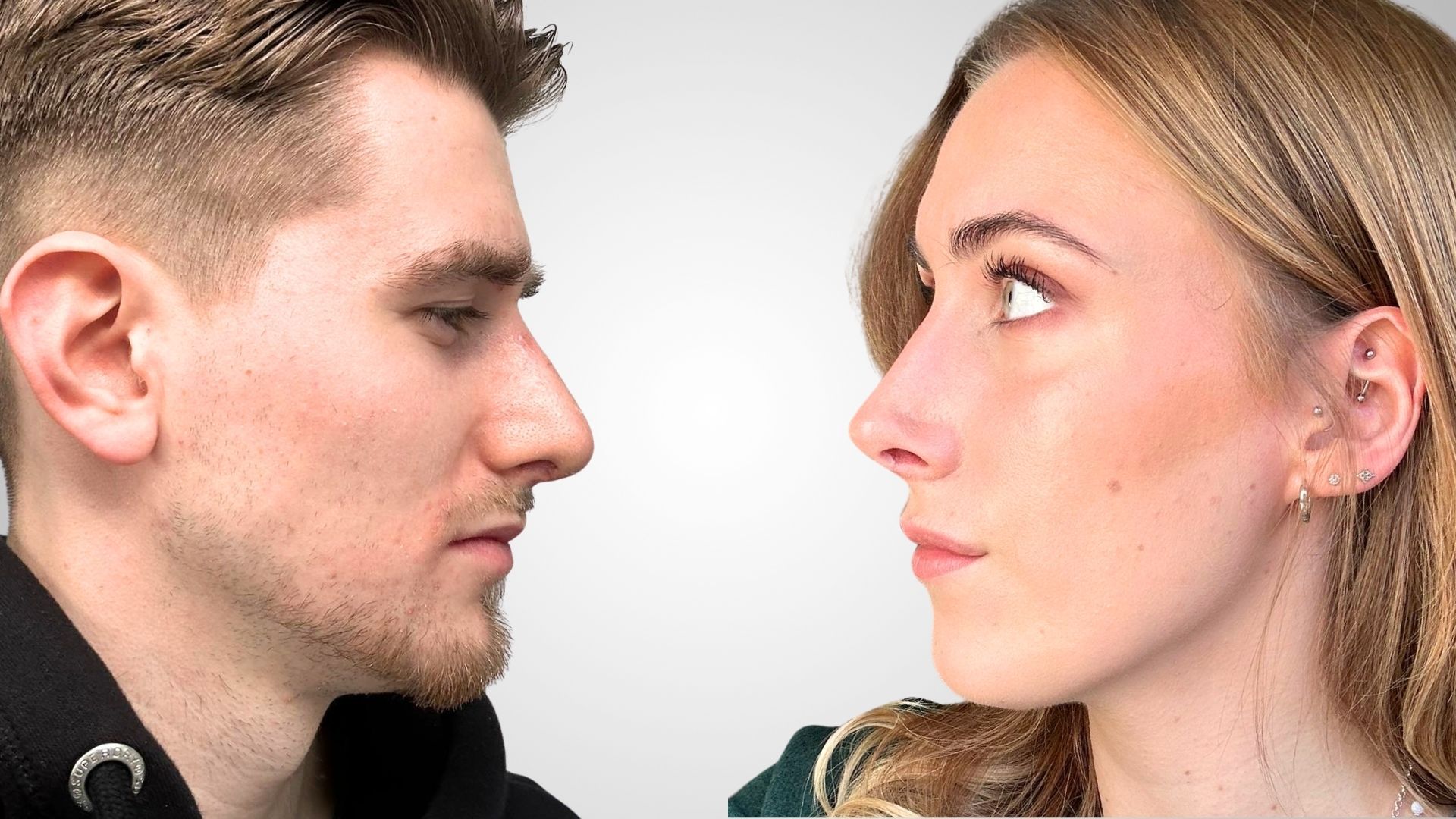
Historically and aesthetically, the ideal female nose is often described as soft, delicate, and refined. The goal of female rhinoplasty is usually to bring harmony to the face by ensuring the nose does not overpower other features, like the eyes or cheekbones.
Key Aesthetic Goals:
- The Supratip Break: Women often request a gentle, subtle curve along the bridge of the nose (the dorsum), leading to a slightly elevated tip.
- An Upturned Tip: The ideal nasolabial angle (the angle between the upper lip and the bottom of the nose) for women is typically between 95 and 105 degrees. This creates a youthful, slightly lifted appearance.
- A Narrower Profile: Female rhinoplasty often involves narrowing the bridge and refining the tip to create a more delicate contour.
Anatomical Considerations:
- Thinner Skin: Women generally have thinner nasal skin than men. While this allows for highly refined and visible tip contouring, it also means the surgeon must be incredibly precise, as even minor structural imperfections will show through the skin.
- Delicate Bone and Cartilage: Female facial bones and nasal cartilage are typically softer and less prominent, requiring a gentler surgical touch.
The Approach to Male Rhinoplasty
For men, the aesthetic goal is usually the opposite of the female approach. The objective is to maintain or enhance a strong, masculine facial structure. A poorly planned male rhinoplasty that results in a "feminised" or overly scooped nose is one of the most common reasons men seek revision surgeries.
Key Aesthetic Goals:
- A Strong, Straight Bridge: Instead of a curve, the ideal male profile features a straight, prominent dorsum. Some men even prefer to keep a very slight, natural-looking bump rather than having a perfectly flat slope.
- A 90-Degree Angle: The ideal nasolabial angle for men is usually around 90 to 95 degrees. The tip should point straight ahead, as an overly upturned tip can look unnatural on a masculine face.
- A Wider Stance: A male nose is typically wider at the bridge and the base, matching a broader jawline and stronger facial proportions.
Anatomical Considerations:
- Thicker Skin: Men tend to have much thicker, more sebaceous (oily) skin on their noses. This thicker skin can hide minor surgical imperfections, but it also makes it much harder to achieve a sharply defined nasal tip.
- Stronger Bone and Cartilage: Male nasal structures are heavier and denser. This requires different, often more robust surgical techniques to reshape the framework effectively.
- Increased Bleeding Risk: Due to a richer blood supply in thicker skin, men may experience slightly more bruising and swelling during the recovery phase.
Why Customisation Matters
While these points highlight the traditional differences between male and female facial aesthetics, it is important to remember that beauty is highly subjective. Your rhinoplasty should not be based solely on gender norms, but rather on your unique facial anatomy, your ethnic background, and your personal identity.
A skilled surgeon will not give you a "cookie-cutter" nose. Instead, they will evaluate your chin, forehead, and cheekbones to design a nose that brings perfect balance to your specific face.
Conclusion
Whether you are looking for a delicate slope or a strong, straight profile, the key to a successful rhinoplasty lies in understanding the subtle nuances of facial anatomy. Both male and female rhinoplasty require exceptional skill, but the artistic vision behind each is distinctly different. The safest way to ensure you get the results you want is to communicate openly with a board-certified professional who understands these differences.
Ready to Refine Your Profile?
If you are considering rhinoplasty and want expert, honest advice tailored to your unique facial structure, book a consultation with our experienced cosmetic surgeons today. We use advanced facial analysis to help you visualise your results and create a personalised treatment plan for a natural, harmonious look.
Contact us now to schedule your appointment and take the first step towards a more confident you!